
Audiobooks are no longer a niche format. According to newly released data from Edison Research, audiobook reach in the United States has reached its highest level ever - a clear signal that the way people consume content continues to evolve toward audio.
Audiobook listening has grown by 167% since 2016
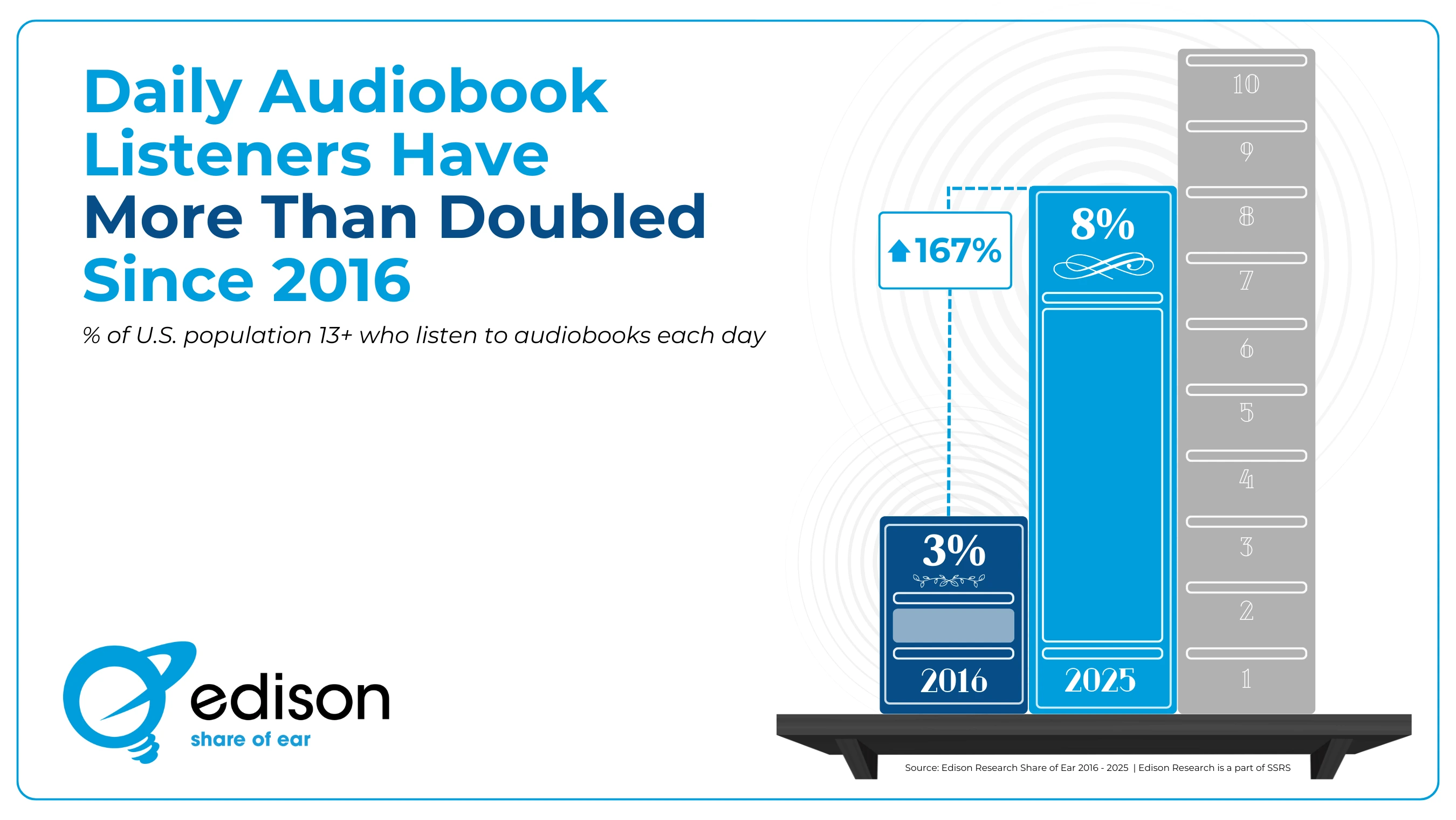
Edison Research’s long-running Share of Ear® study tracks how Americans aged 13+ spend their daily audio time. In 2016, just 3% of Americans reported spending any of that time listening to audiobooks. By the end of 2025, that number had climbed to 8% of the U.S. population aged 13+.
That represents a 167% increase in audiobook listeners over less than a decade.
While Edison Research notes that no single factor can fully explain this growth, one likely driver is broader access to audiobooks through streaming platforms and subscription services, which have made listening easier and more habitual whether commuting, exercising, or multitasking at home.
134 million Americans have listened to an audiobook
In partnership with the Audio Publishers Association, Edison Research also examines audiobook adoption and audience attitudes more closely. Data from the Audio Publishers Association 2025 Consumer Survey shows that:
-
51% of Americans aged 18+ have listened to an audiobook at least once
-
This equals approximately 134 million people
-
Among spoken-word listeners who haven’t yet tried audiobooks, 38% say they are interested, up from 32% in 2024
The takeaway is clear: audiobook adoption is growing, and there is still significant room for expansion among audiences already comfortable with audio.
Audiobooks are part of a much bigger audio trend
These findings don’t exist in isolation. Edison Research connects audiobook growth with broader shifts across audio - including podcasts and other spoken-word formats.
Together, these signals point to a single reality: audio consumption is not just growing - it’s diversifying.
For publishers and media organizations, this shift carries an important implication.
Most media companies already produce large volumes of high-quality written content: articles, analysis, long-form pieces, interviews. As audio listening continues to rise, that existing content becomes a natural foundation for:
-
narrated articles
-
podcast episodes
-
serialized spoken-word formats
This directly connects to a broader trend we explored in a previous MediaThrive article: people are increasingly choosing to listen to information rather than read it, fitting content into their daily routines instead of setting aside dedicated reading time.
Audio is no longer optional
Audiobooks are just one indicator of a larger transformation. Across media formats, the pattern is consistent:
-
reading time is fragmented
-
listening time is growing
-
audiences expect content to be accessible, effortless, and available everywhere
In this environment, the ability to turn existing written content into audio or in an AI podcast - quickly and at scale becomes a strategic advantage, not an experiment.
At MediaThrive, we help publishers meet this shift by turning existing written content into high-quality audio automatically - without studios, hosts, or production overhead.
If your audience is listening more, your content should be ready to follow them.


